The Leonberger is known for its majestic bearing, magnificent mane and abundant coat. But behind this impressive fur lies a grooming routine that requires consistency, patience and, above all, good tools.
At Corleone Leonberger, we see grooming as much more than a matter of appearance. It is a special time to examine your dog, check the condition of its skin, care for its coat and build trust between the dog and the person looking after it.
Contrary to some common beliefs, a Leonberger does not need to be shaved to be comfortable. Its double coat has particular characteristics that are important to respect.
1. Understanding the Leonberger's coat
The Leonberger has a double coat made up of two layers:
The outer coat: longer, fairly straight and resilient, it helps protect the dog from the elements.
The undercoat: softer and dense, it plays an important role in thermal insulation.
The Leonberger also goes through shedding periods during which the amount of dead hair can be impressive.
Regular grooming helps remove this dead hair, limit the formation of mats and monitor the condition of the skin.
Important: Routinely shaving a Leonberger's coat should be avoided. A very short clip can disrupt regrowth and leaves the skin more exposed to the sun. Shaving may, however, be justified for medical reasons.
2. A good setup: the grooming table
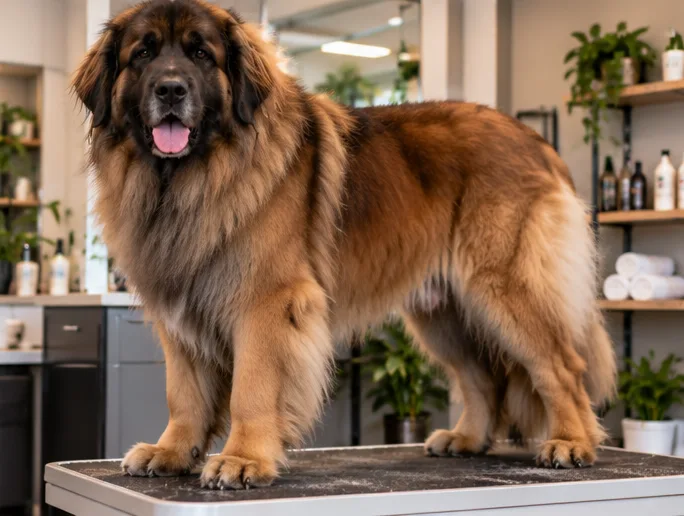
A sturdy, non-slip grooming table makes caring for a large dog considerably easier.
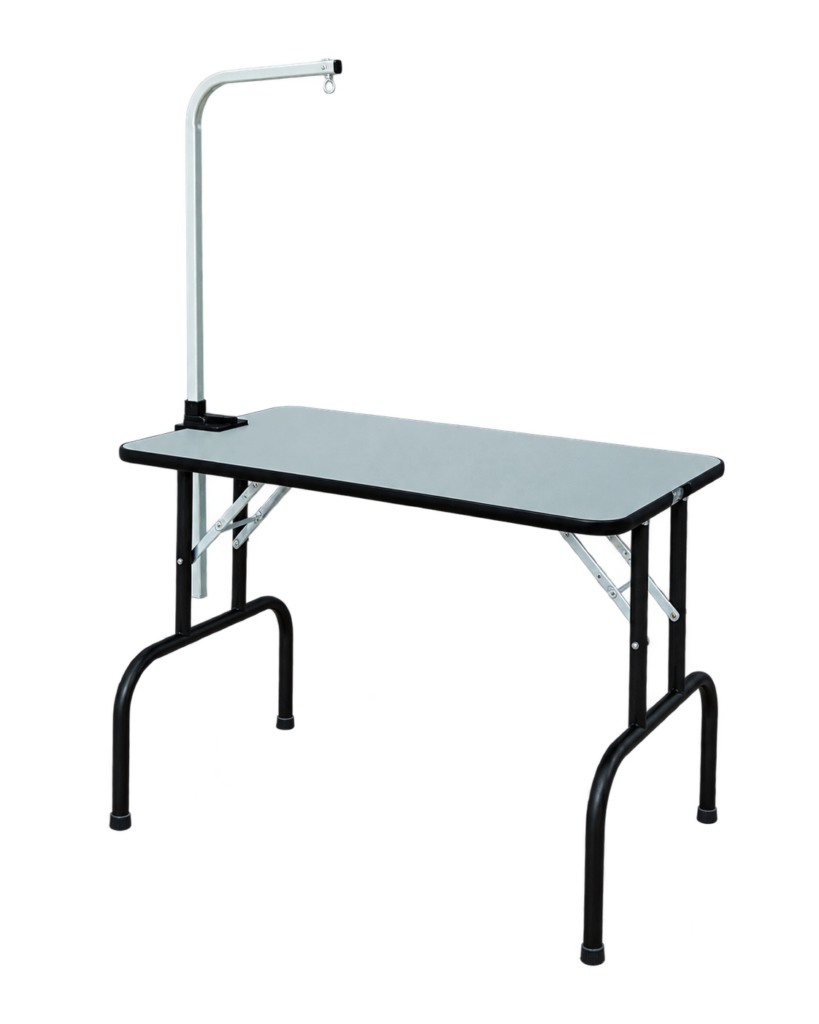
Our advice at Corleone Leonberger: buy the largest grooming table possible, suited to your dog's weight and length.
It is also possible to shorten the legs of some tables to get a more practical height. This can be a good option with a Leonberger, since a table that is too high makes getting on and off more difficult.
However, before modifying the legs, make sure the structure allows it and that the modification does not compromise the table's stability or load capacity. A height-adjustable table is another option.
The goal is a surface low enough to make it easy for the dog to get on, but high enough for you to work comfortably.
The dog should be able to stand naturally and be gradually accustomed to this setup.
A grooming arm can help keep the dog in position, but never leave a dog tethered on a table unattended.
3. The high-velocity dryer: a particularly useful tool
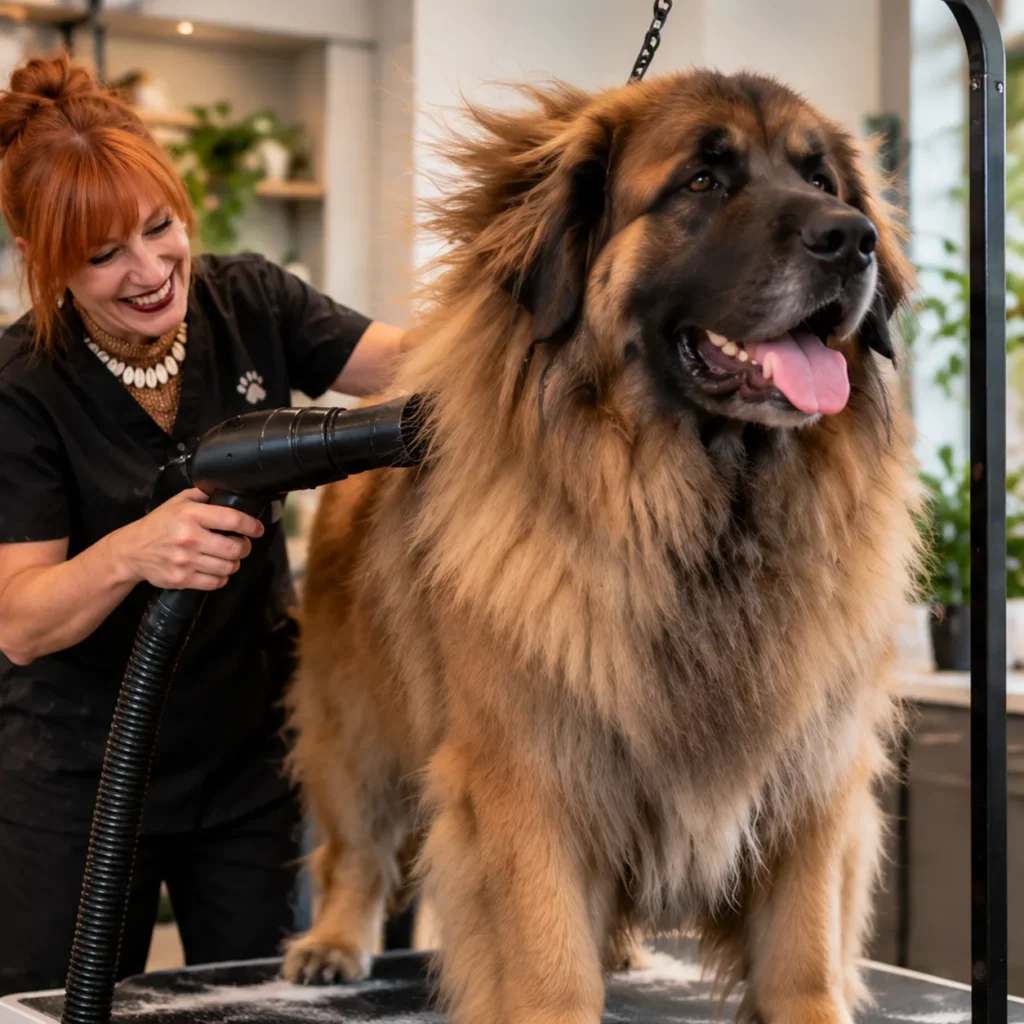
The high-velocity dryer is one of the most practical pieces of equipment for grooming a Leonberger.
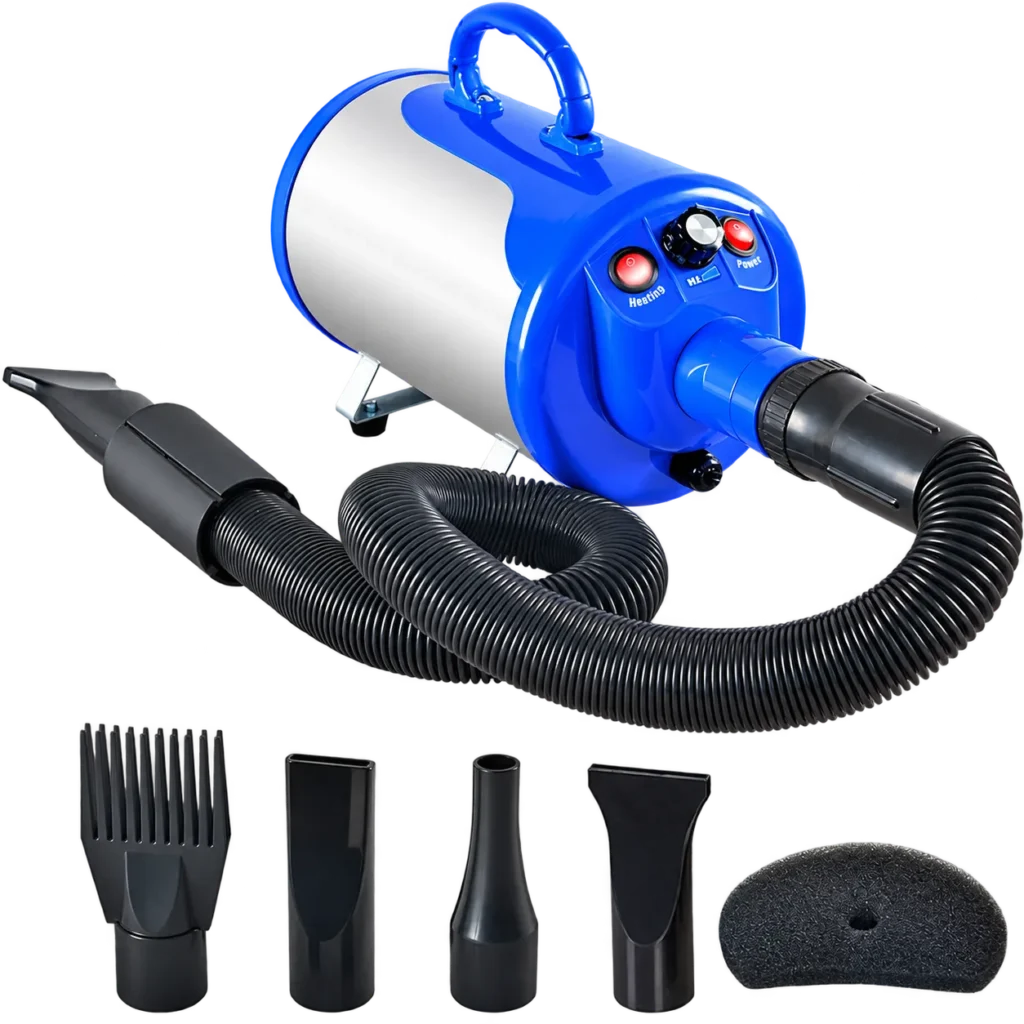
Unlike an ordinary household hair dryer, it blows a powerful stream of air that separates the hair, drives water out after a bath and loosens some of the dead undercoat.
It is especially useful during shedding periods.
No need to spend a fortune to get equipped! Amazon offers dog dryers at a range of prices, including relatively affordable models that can be suitable for home use.
Before buying, look for a unit with adjustable airflow, a long enough hose and a noise level your dog can tolerate.
Our advice: Start on a low setting and increase gradually according to your dog's tolerance. Avoid aiming the airflow directly at the eyes, ears or sensitive areas. The air should never be too hot.
The dryer can also be used between baths, on a dry coat, to help remove dead hair. This use is separate from Line Brushing, for which we always recommend lightly misting each section before brushing it.
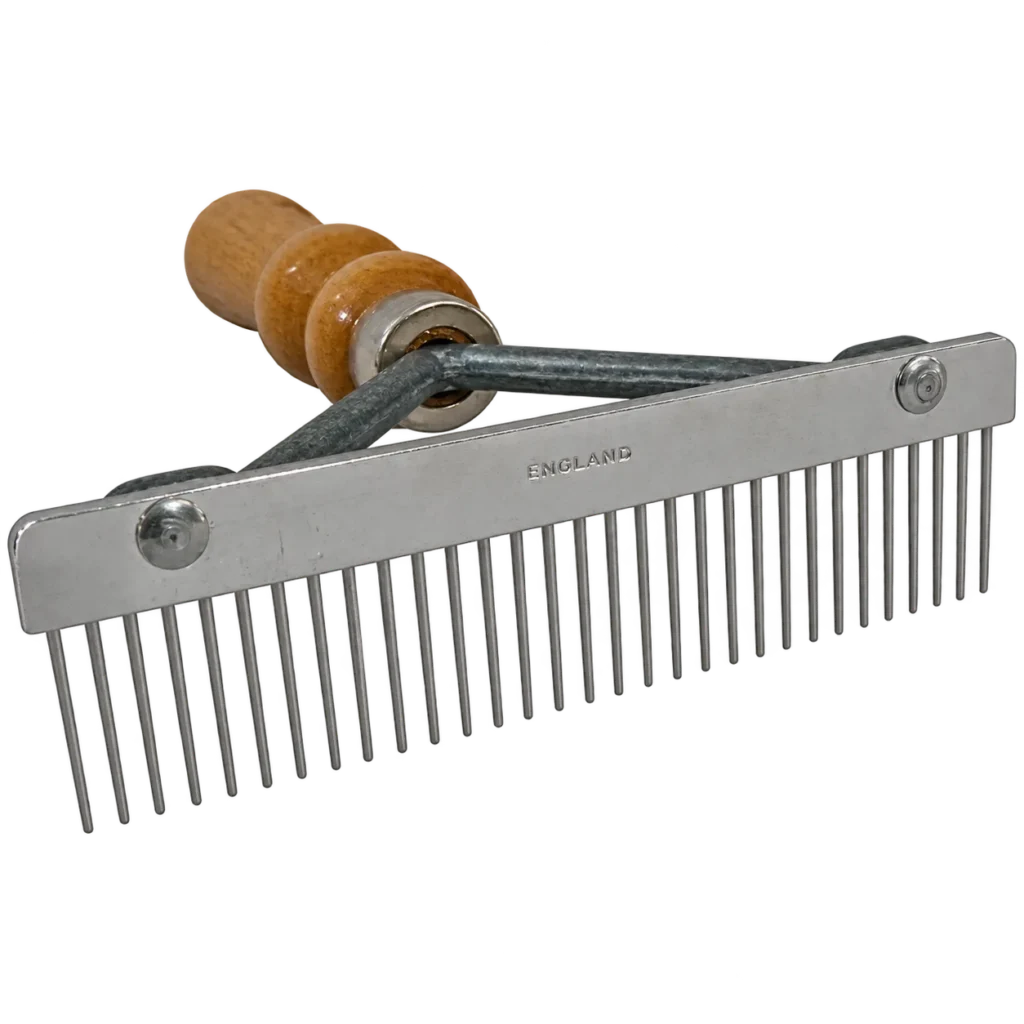
4. The long-toothed metal comb
The metal comb is essential for checking that brushing has truly reached all the layers of the coat.
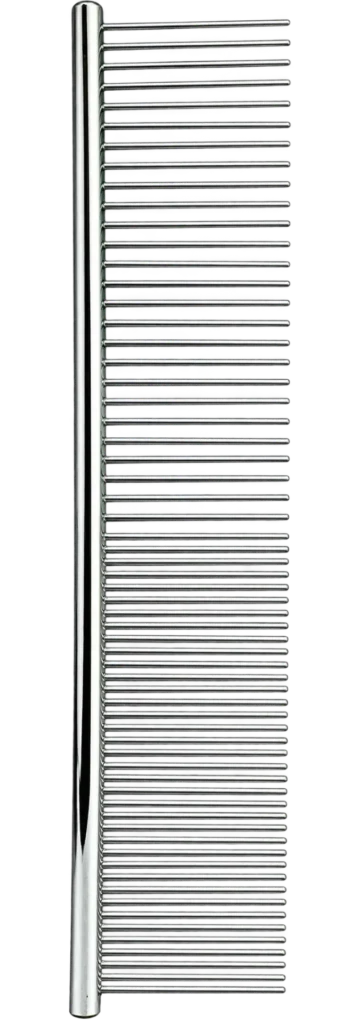
A brush can sometimes give the impression that the dog is completely detangled while mats remain close to the skin.
The comb is especially useful for checking the following areas: behind the ears, under the armpits, the britches, the tail and the feathering.
Work gently, in small sections, without pulling on mats.
5. The slicker brush
The slicker brush is very handy for caring for the feathering, the legs and certain areas of the coat.
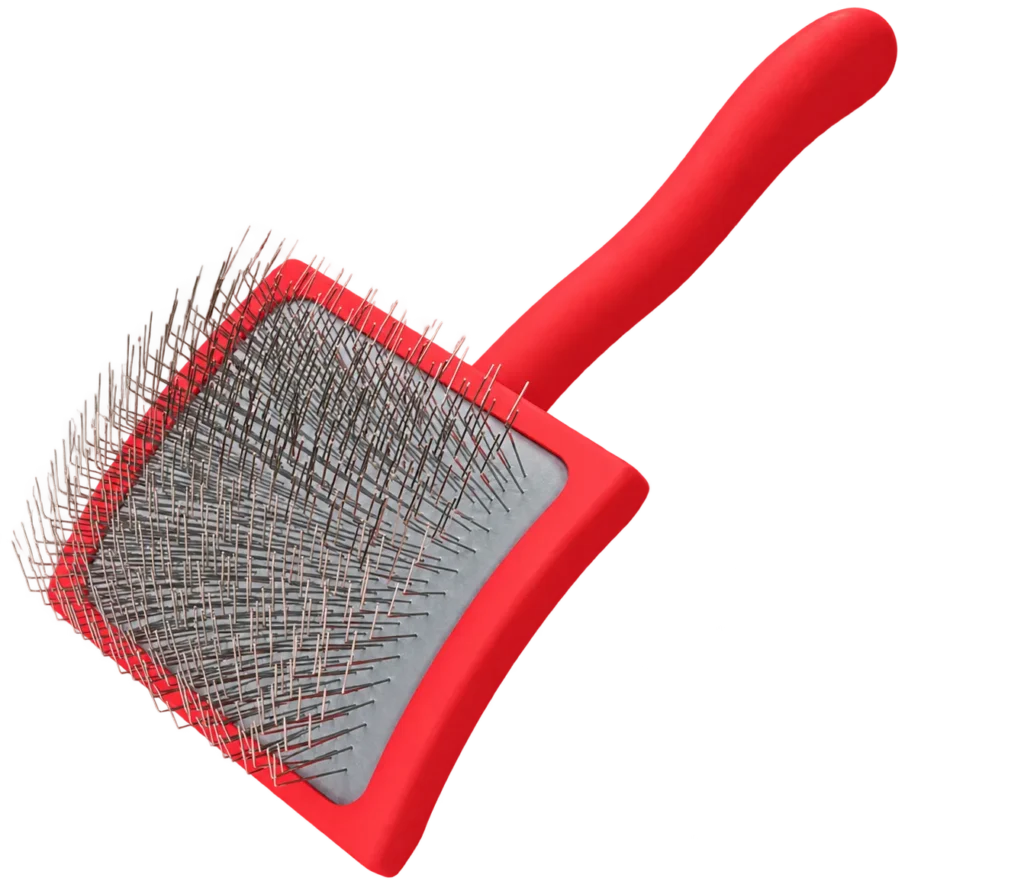
It separates the hair, removes loose hair and lets you gradually work through small tangled sections.
The right technique is to work gently, layer by layer, then check the result with a metal comb.
6. The long metal pin brush
The long metal pin brush is particularly well suited to the routine care of long coats.
Choose your brush carefully: the metal pins should not have small balls on their tips.
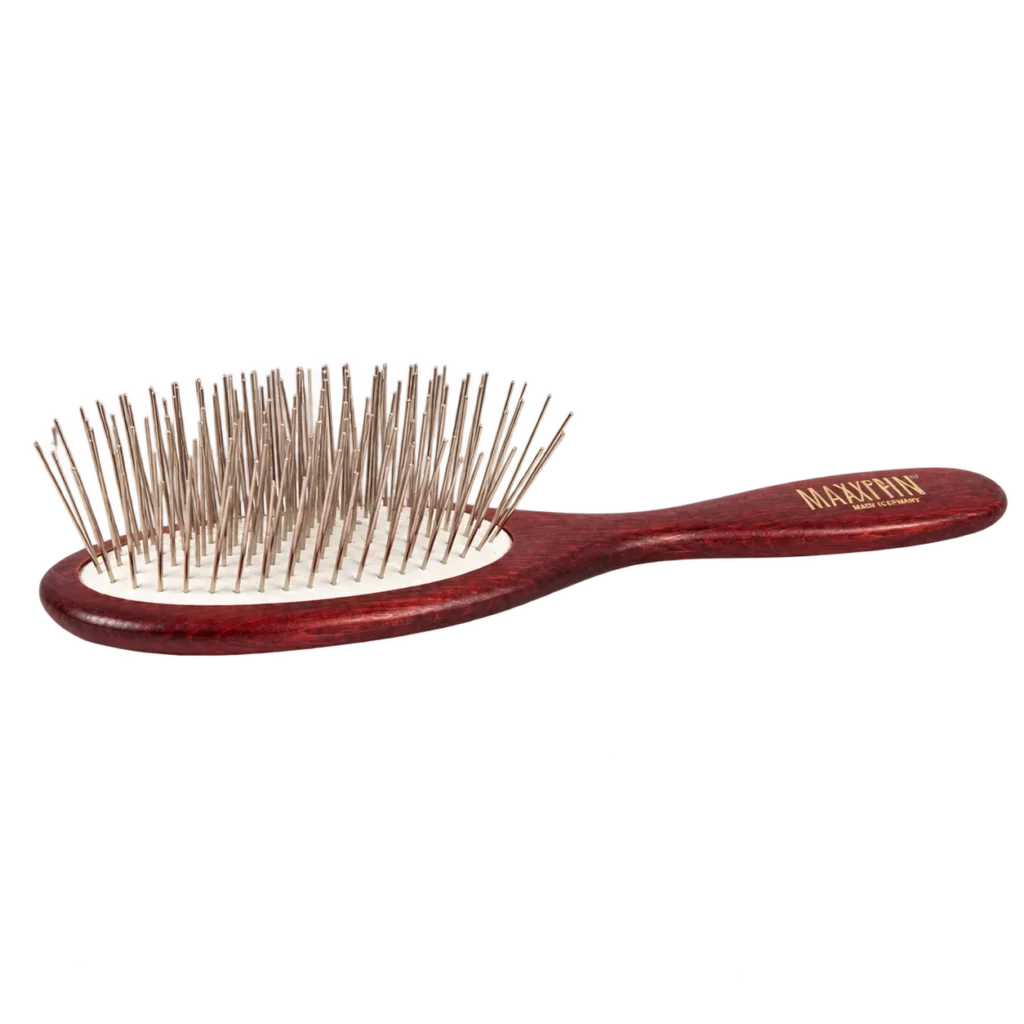
We prefer brushes with long, smooth metal pins without added rounded tips, as they glide more easily through the Leonberger's abundant coat and are less likely to snag the hair.
The brush should be of good quality, with well-finished pins that are not sharp.
It helps separate the hair, gently detangle and keep the coat looking its best.
It can be used regularly, together with the metal comb.
For a show Leonberger, it is also useful for setting the feathering and presenting the coat naturally, without trying to give it an artificially sculpted look.
7. Line Brushing: the right technique for caring for the Leonberger's undercoat
Line Brushing is a methodical brushing technique that involves working the coat in small sections, reaching the undercoat close to the skin rather than brushing only the surface.
This method is especially useful for the Leonberger, whose abundant double coat can hide mats close to the skin.
Step 1 — Always mist the coat
Never Line Brush a completely dry coat.
Before you begin, lightly mist the section you will be working on with water or a detangling product made for dogs.
Light misting helps reduce friction and static, makes detangling easier and limits breakage.
For this step, we especially recommend the grooming products from Peke Secret, a Quebec company we particularly appreciate. You can choose a leave-in conditioner or detangler suited to your dog's coat, following the manufacturer's instructions.
A diluted conditioner can be used, but only as recommended by the manufacturer. Not all conditioners are designed to be left in the coat without rinsing.
Mist regularly during grooming so the sections you work on stay slightly damp, without being soaked.
Step 2 — Part the hair down to the skin
With one hand, gently part the coat to open a horizontal line so the brush can reach the hair close to the skin.
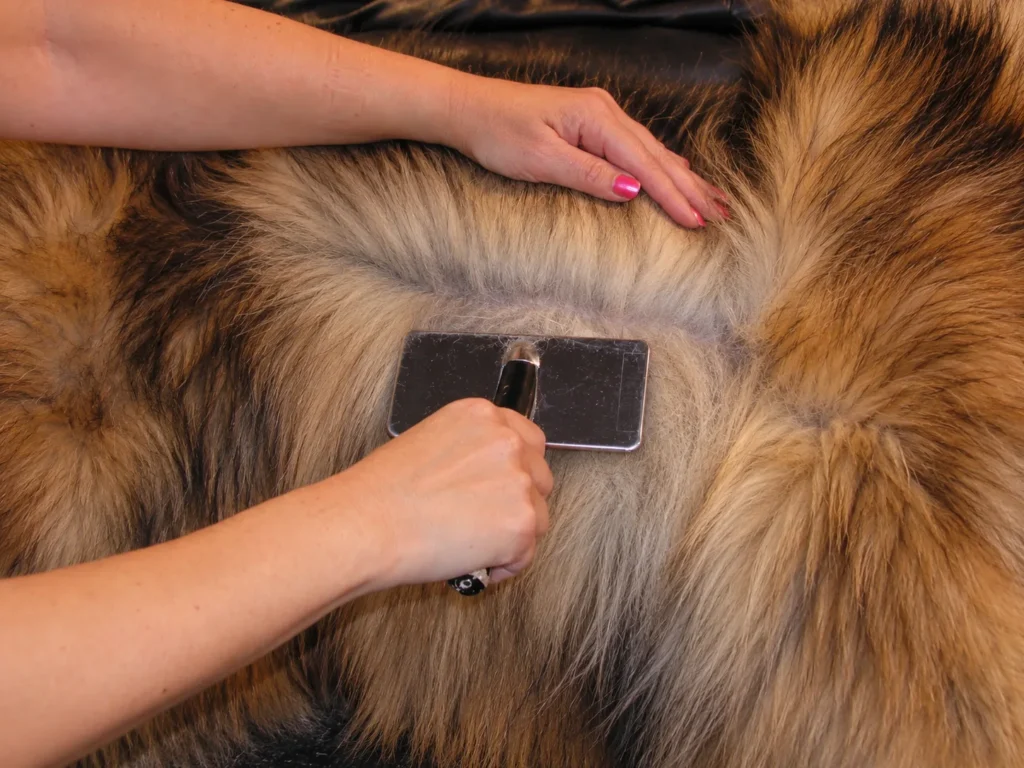
Mats often form in the undercoat, especially in areas of friction.
It is therefore important to work deep into the coat, but always gently.
Step 3 — Work in very small sections
Lift a thin layer of coat, ideally just a few millimetres at a time.
A section of about 3 mm can serve as a practical guide to work gradually, but this measurement is not a universal anatomical rule.
The thicker the section, the harder it can be to find mats and work them out without pulling.
Caution: the brush should reach the undercoat without pressing too hard on the skin. Never dig the pins into the skin.
Step 4 — Use slow, straight strokes
Gently place the brush at the base of the parted section, then slowly draw it toward the ends of the hair, in the direction of growth.
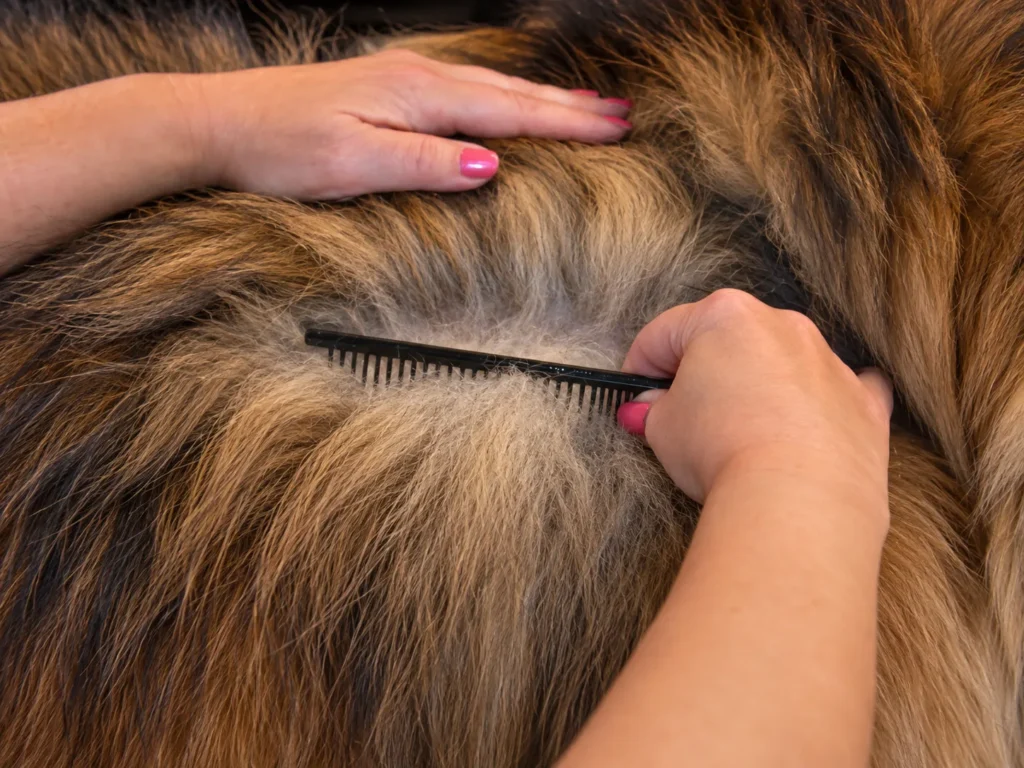
Avoid sudden, fast or repeated strokes in the same spot.
If the brush meets resistance, stop and gently work out the area rather than pulling.
Step 5 — Check with the metal comb
After two or three gentle passes with the brush, try sliding a long-toothed metal comb through the section you have worked on.
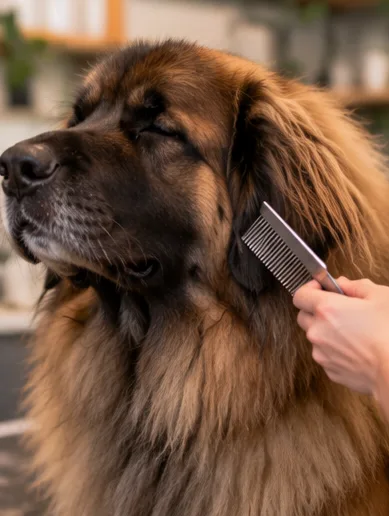
If the comb glides through easily, you can move on to the next section.
If it catches on a mat, gently resume detangling. You may need to use your fingers or a suitable detangling product.
Never force the comb through.
Step 6 — Work line by line
Once the first section is detangled, release a new thin band of hair and start again.
Continue gradually until the whole area has been groomed.
Pay special attention to the mane, behind the ears, under the armpits, the britches and the leg feathering.
Advice from Corleone Leonberger
Good Line Brushing is not measured by the amount of hair removed, but by the quality of the detangling and the dog's comfort.
Take your time, mist the coat regularly and always work gently.
The goal is to preserve a healthy, natural and beautiful double coat, without damaging the outer coat or irritating the skin.
8. Finishing scissors
Scissors are mainly used for small touch-ups, especially around the feet.
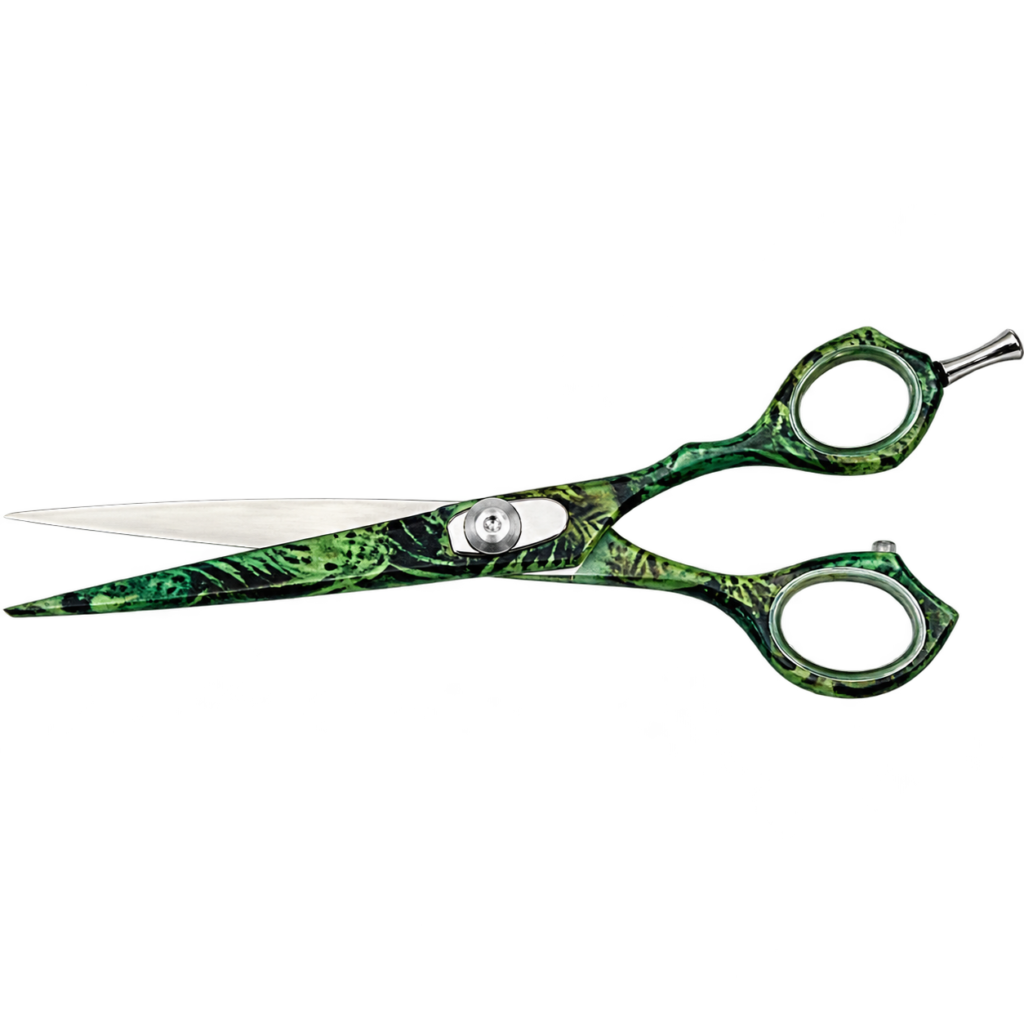
For a Leonberger, it is best to keep a natural outline and avoid excessive trimming.
Use scissors designed for grooming and work very carefully near the skin, especially where it forms folds.
9. Nail care
Nail clippers and an electric nail grinder are two complementary tools.
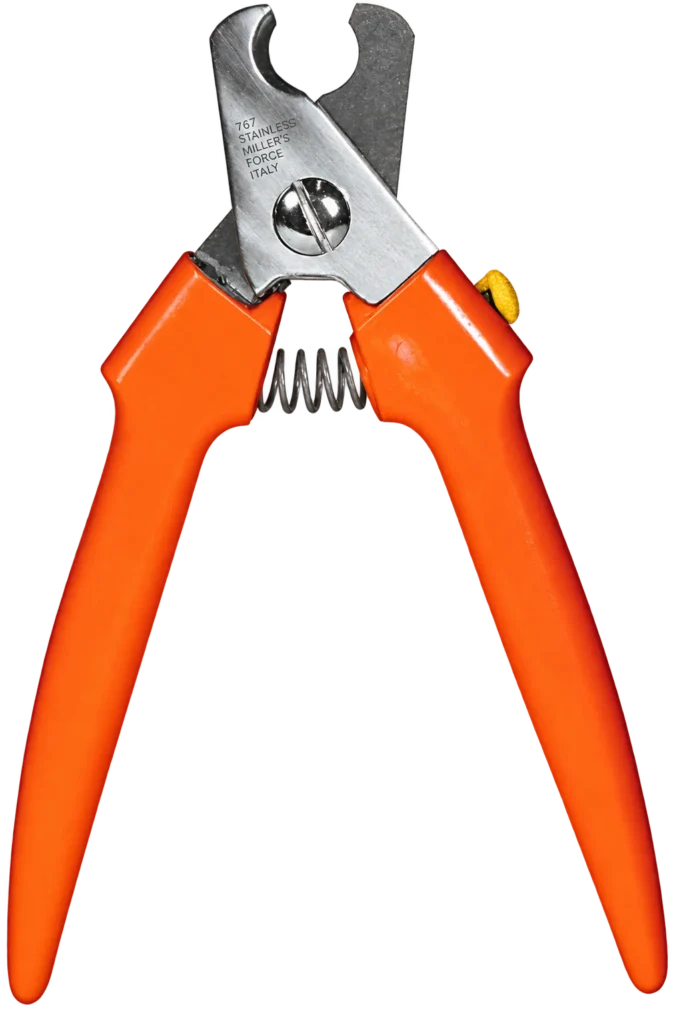
The first shortens the nails, while the second helps round off the tips.
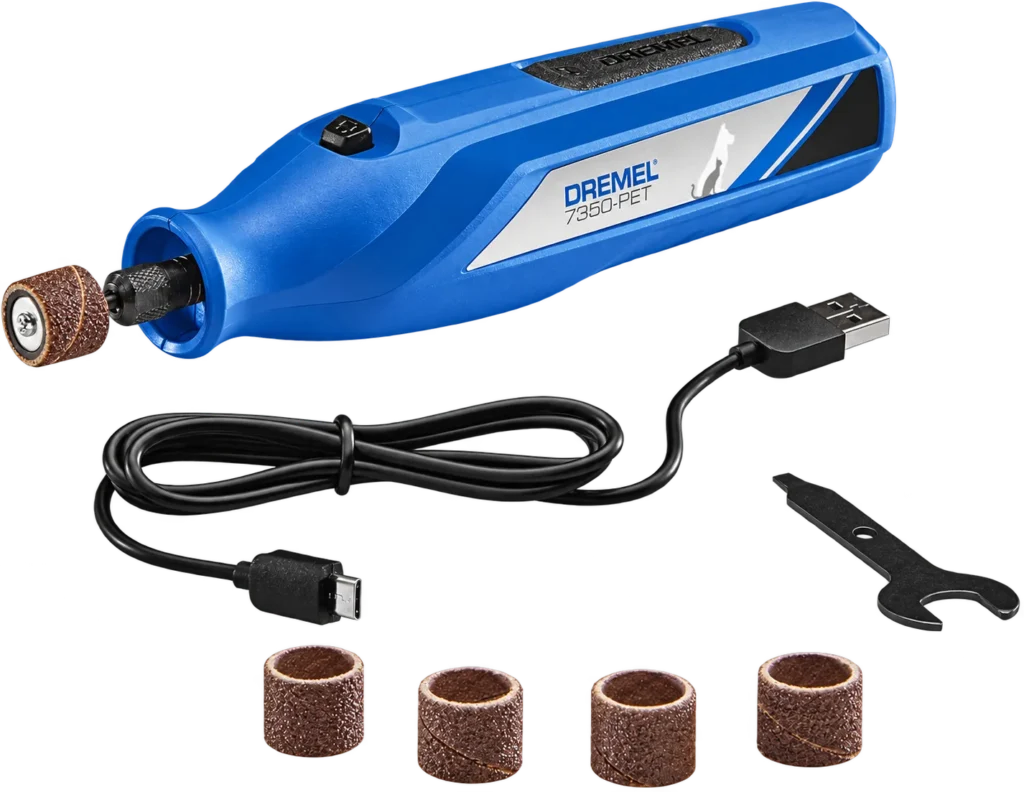
Work gradually, without reaching the quick of the nail, and get your dog used to the noise and vibration of the grinder.
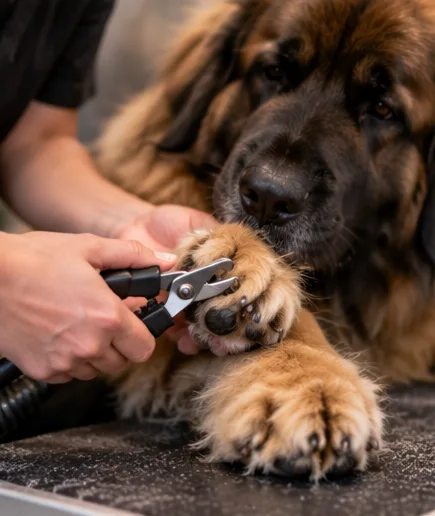
Nails should be checked regularly, including the dewclaws, which can grow without wearing down naturally.
10. How often should you groom your Leonberger?
How often to groom depends on the dog's lifestyle, the density of its coat, the shedding season and whether it takes part in dog shows.
The companion Leonberger
For a Leonberger living as a family pet, a thorough brushing once a week can be enough, provided its coat is well maintained and free of mats.
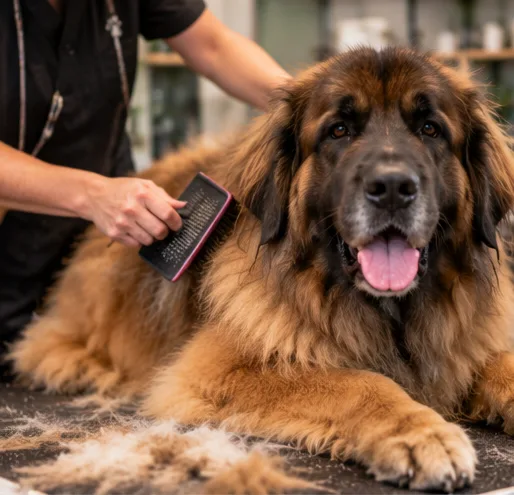
During shedding periods, more frequent grooming may be needed to remove dead hair.
It is better to take the time to work properly through the different layers of the coat than to quickly run the brush over the surface.
The Leonberger with a partner family, preparing for the Canadian championship
At Corleone Leonberger, dogs placed with our partner families who take part in a show program require special attention.
During their preparation and their path to the Canadian championship, we recommend almost daily coat care.
This care makes it possible to regularly monitor the condition of the coat, prevent mats from forming and maintain a neat presentation.
This does not necessarily mean doing a full Line Brushing every day, but rather checking the coat, working on the areas that need it and getting the dog used to being handled.
Sessions should remain gentle so as not to remove undercoat unnecessarily or weaken the outer coat.
This routine also helps prepare the dog for the handling it will experience at shows.
What about baths?
Baths are given as needed, with a shampoo made for dogs, followed by thorough rinsing and drying.
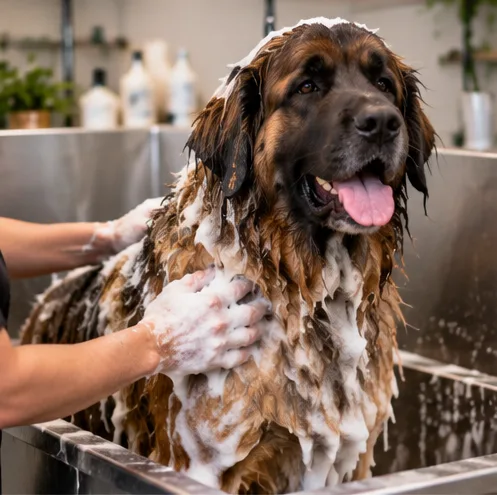
There is no need to bathe your dog at every grooming session.
11. Our recommended grooming products: Peke Secret, a Quebec company
At Corleone Leonberger, we place great importance on the quality of the products used to care for our dogs' magnificent double coats.
That is why we highly recommend Peke Secret, a Quebec company specializing in grooming products for dogs and cats.
We especially appreciate being able to support a local company that offers coat-care products.
For a Leonberger, it is important to choose products suited to its double coat that clean it, make detangling easier and preserve its natural appearance.
Whether your Leonberger is a family companion or a show dog, we invite you to discover this Quebec company.
A local company we are happy to recommend!
Discover their products: www.pekesecret.com
Conclusion — Grooming, an act of care and companionship
A well-groomed Leonberger is not only beautiful to look at. Regular grooming also makes it possible to quickly detect skin problems, mats or issues with the feet.
Grooming should never become an ordeal for the dog. With patience, the right tools and a technique that respects the coat, it can become a pleasant and special time.
At Corleone Leonberger, we encourage families to make grooming a habit from the moment the puppy arrives home.
Whether your Leonberger is a family companion or a future show champion, the essentials remain the same: respect its natural coat and give it care suited to its needs.
A beautiful coat is not achieved by removing as much hair as possible, but by caring for the hair that should stay.