A beautiful pedigreedoes not guaranteegood genetics
Behind the champions, the great bloodlines and the prestigious titles: understanding what is really at stake in canine genetics and breeding.
Corleone LeonbergersReading time: about 15 minutes
An impressive pedigree can be misleading
It shows who the ancestors are, but reveals neither diseases, genetic predispositions nor longevity.
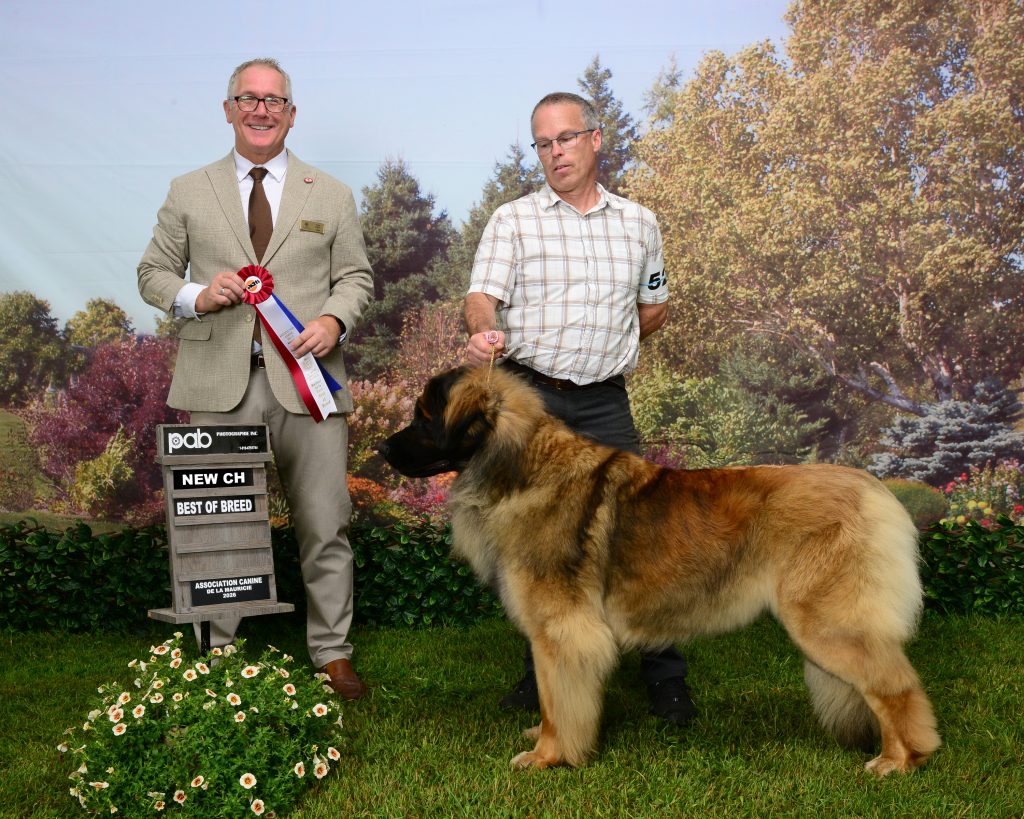
Titles reward an appearance
A champion may faithfully represent the standard, but it is no guarantee of genetic health.
True selection goes further
It takes into account the standard, health, temperament, genetic diversity and future generations.
I
PART ONE
What a pedigree really reveals
A beautiful pedigree… but what does that really mean?
In the world of dog breeding, we regularly hear this expression: “This dog has a magnificent pedigree!”
But what really makes a pedigree magnificent?
The number of champions listed over several generations?The presence of dogs that have won prestigious titles?The international reputation of certain kennels?Or simply names that everyone recognizes?
A pedigree full of champions can certainly be impressive. It can reflect a selection effort that produced dogs recognized for their conformity to the breed standard.
But there is a fundamental difference between a prestigious pedigree and a quality genetic heritage.
A pedigree tells us who a dog’s ancestors are. It does not automatically reveal the diseases they may have passed on, their genetic predispositions, their longevity or the problems found in their offspring.
Scientific research confirms that pedigree analysis is an important tool for understanding relatedness and genetic diversity, but that it has limits. DNA analyses can reveal information that pedigrees cannot always detect.
SCIENTIFIC REFERENCE — Wade, C. M. (2011), Inbreeding and genetic diversity in dogs: Results from DNA analysis, The Veterinary Journal. pubmed.ncbi.nlm.nih.gov/21745753
A champion title rewards a dog for qualities assessed in competition. It does not certify its entire genetic heritage.
What no one can see by simply looking at a pedigree
When we look at a pedigree, we see names, origins, titles and family ties. But what do we really know about all these dogs?
Do we know the health problems found in each litter? The dogs that died prematurely? The diseases that appeared at six, eight or ten years of age? The structural problems repeated in certain lines of offspring? And above all, do we have all this information?
We have to be realistic. Even with the best will in the world, it is difficult for a breeder to know the complete medical history of several generations, especially when the dogs are spread across different countries.
Some diseases appear late. Some owners never tell the breeder about their dog’s health problems. Some diagnoses remain uncertain or are never made.
It can also happen that information is not disclosed. However, without proof, we cannot claim that a breeder deliberately hid a problem.
This is precisely why we must be cautious about claims that a bloodline is entirely free of disease.
The absence of known problems is not necessarily proof of problem-free genetics.
To evaluate a bloodline, we need to learn not only about the breeding dogs, but also about their brothers, sisters, offspring and, where possible, previous generations.
The Royal Kennel Club explains that estimated genetic values, called Estimated Breeding Values (EBVs), use the health results of a dog and its family to better assess certain complex hereditary risks.
This approach recognizes an essential principle: a breeding dog cannot be evaluated solely on what we see in it.
REFERENCE — The Royal Kennel Club, Estimated breeding values. royalkennelclub.com
A rosette rewards what the judge sees in the ring. It says nothing about what the dog passes on.
A breeding dog cannot be evaluated solely on what we see in it.
II
PART TWO
How genetics are passed on
Genetics is not a recipe where you mix two dogs to get an average
A very common belief about breeding is that by mating two dogs with opposite characteristics, we will automatically get intermediate puppies.
Let’s take a simple example. We have a very tall male and a much smaller female. Some might believe the puppies will necessarily be exactly halfway between the two parents in size. But that is not how genetic inheritance works.
Size is a complex trait, influenced by several regions of the genome. Puppies receive a combination of genetic variants from both parents. Each puppy inherits a different combination.
Each puppy is unique: some may be taller, others smaller, others in between.
There is indeed a statistical relationship between the parents’ characteristics and those of their offspring. Selection can therefore influence the average size of future generations. But it would be wrong to believe that mating a large dog with a small dog will automatically produce medium-sized dogs.
The same principle applies to many structural characteristics: angulation, body proportions and certain aspects of movement. These characteristics can be influenced by several genes, sometimes with complex effects.
Genetics is not a simple addition followed by dividing by two.
That is why we believe it is better to select breeding dogs that already have the qualities we are looking for, rather than systematically relying on one partner to make up for the other’s faults.
Can we really correct a dog’s faults by choosing a partner that doesn’t have them?
This is a fundamental question. Imagine a female with a structural fault. We choose a male with excellent structure, hoping his qualities will correct the fault in the puppies. Can this strategy work?
Yes, improvement is genetically possible. But it is never automatic.
It all depends on the trait involved, its heritability, the genetic variants passed on and the characteristics of the population. Some traits respond more easily to selection than others. For complex traits, results can be hard to predict when all we have is the parents’ appearance.
We must also understand that a dog that does not visibly show a fault can still pass on genetic factors that contribute to it. Conversely, a dog with a fault can pass a more favourable genetic combination on to some of its offspring.
That is why selection should not rest solely on the idea that one dog will “fix” the other. At Corleone Leonbergers, our philosophy is different: we prefer to look for two breeding dogs that each already come close to the breed standard. We want to bring qualities together, not simply hope that opposite faults will cancel each other out.
This does not mean a dog must be perfect to contribute positively to breeding. No dog is perfect. Rather, it means we must understand the strengths and weaknesses of each breeding dog, assess the risks and avoid piling up unnecessary compromises.
The science of genetic selection supports the use of family data and evaluation methods rather than relying only on individual appearance.
REFERENCE — The Royal Kennel Club, Estimated breeding values, documentation on the use of family data in selecting for complex hereditary traits.
The breed standard: our reference, but not our only responsibility
At Corleone Leonbergers, we believe the selection of breeding dogs must begin with a thorough knowledge of the Leonberger standard.
A Leonberger should not only be impressive for its size or coat. It must have balanced construction, harmonious proportions, appropriate bone, functional movement and a temperament that matches the characteristics of the breed.
The standard is therefore an essential reference. When a breeding dog departs significantly from the standard on several points, it becomes important to think about what it could pass on.
But a distinction must be made between a minor cosmetic fault and a problem likely to affect health or function. Not all departures from the standard have the same consequences. Moreover, the pursuit of an ideal appearance must never come at the expense of health, welfare or genetic diversity.
Our goal is not simply to produce dogs that look like the ideal Leonberger. We want to produce dogs able to live and move like healthy, functional Leonbergers.
Balanced construction, harmonious proportions, functional movement: the standard is our reference.
III
PART THREE
Popular champions and genetic diversity
When champions become too popular: a documented genetic risk
There is a well-known phenomenon in canine population genetics: the popular sire effect, or popular sire effect.
When a male wins many titles and gains an international reputation, he can become extremely sought after for breeding. Many breeders then want to use the same dog, sometimes over several generations of females.
In the short term, this practice can help spread certain desirable qualities. But it also carries a risk. If one breeding dog contributes disproportionately to the following generations, its genetic variants become more and more frequent in the population. This includes favourable variants, but also variants associated with hereditary diseases.
33–70%
A study published in Animal Genetics in 2011 analyzed ten dog breeds: depending on the breed, the effective number of males contributing to genetic diversity was only 33% to 70% of the total number of males used.
In other words, some breeding dogs contributed much more than others to the genetic heritage of the following generations. These results do not concern the Leonberger specifically, but they illustrate a documented problem in dog breeding.
SCIENTIFIC REFERENCE — Leroy, G. et al. (2011), Mating practices and the dissemination of genetic disorders in domestic animals, based on the example of dog breeding, Animal Genetics. pubmed.ncbi.nlm.nih.gov/20528847
Another study, covering 215 breeds registered with the UK Kennel Club between 1980 and 2014, also highlighted the major influence of popular sires on the evolution of inbreeding.
That is why a dog’s reputation, however prestigious, should never be enough to justify using it for breeding.
A great champion can be an interesting breeding dog. But overusing him can become a problem for the genetic diversity of an entire breed.
Genetic diversity is not measured by the distance between two countries
At Corleone Leonbergers, we place great importance on researching bloodlines and on looking to different countries. However, it is essential to understand a scientific reality.
Importing a dog from Germany, Poland, the Czech Republic or another country does not automatically mean that dog will bring significant genetic diversity. Two dogs can come from completely different countries and share many ancestors. Conversely, two dogs living in the same country can be relatively distant genetically.
What really matters is not geographic distance, but genetic relatedness.
The coefficient of inbreeding calculated from the pedigree estimates the probability that certain copies of genes come from a common ancestor. However, this calculation depends on the depth and accuracy of the pedigree. Genomic analyses can complement this information by measuring certain aspects of relatedness and homozygosity directly in the DNA.
A scientific review published in Diversity in 2022 highlights the value of using pedigree and molecular data together to better understand the genetic diversity of dog breeds.
SCIENTIFIC REFERENCE —Evaluation of Genetic Diversity in Dog Breeds Using Pedigree and Molecular Analysis: A Review (2022). mdpi.com/1424-2818/14/12/1054
Importing a dog does not guarantee new genetics. It is its actual origins and its relatedness to the existing population that determine its potential contribution to diversity.
The value of a breeding dog is measured neither by its popularity nor by its country of origin, but by its actual relatedness to the population.
IV
PART FOUR
Inbreeding, linebreeding and outcrossing: understanding breeding strategies
In the world of dog breeding, three terms come up regularly: inbreeding, linebreeding and outcrossing. These methods are used to guide genetic selection, but they do not automatically produce the hoped-for results. To understand their consequences, we must look at what they actually change in the genetic heritage of the following generations.
InbreedingMATING RELATED DOGS
Inbreeding consists of mating two dogs that share common ancestors. In everyday language, the term often refers to matings between close relatives, such as a father and daughter or a brother and sister. Scientifically, it also includes matings between more distant relatives.
It can increase genetic uniformity and make certain characteristics more consistent. But the offspring have a greater probability of inheriting two identical copies of a variant from a common ancestor: this ishomozygosity by descent, which affects favourable variants as well as those associated with recessive diseases.
As it accumulates, inbreeding can reduce fertility, litter size and general vitality: this is inbreeding depression. A study of 227 breeds found high levels of genomic inbreeding and an association with certain indicators of morbidity.
This does not mean a puppy from related parents will necessarily be sick. It means the risks must be assessed rigorously.
Can fix qualities, but increases risks.
LinebreedingSTRENGTHENING A LINE… AND ITS RISKS
Often presented as more refined than inbreeding, it consists of mating related dogs to preserve or strengthen the influence of a sought-after ancestor: a great champion, or a breeding dog known for its construction, temperament or offspring. The same dog then appears in several places in the pedigrees of both breeding dogs.
Linebreeding is a form of inbreeding. Giving it another name does not remove the risks. By concentrating the influence of a renowned ancestor, we also increase the probability of finding its undesirable variants.
What do we really know about this breeding dog? Its titles, its appearance, the success of some offspring… But do we know all the health problems that appeared in its family? The recessive variants it could pass on?
It must therefore be evaluated with the same scientific rigour as any other form of inbreeding.
Concentrating a great champion’s genetics does not mean concentrating only its qualities.
OutcrossingLOOKING FOR LESS RELATED LINES
In purebred breeding, an outcross is a mating between two dogs with relatively low relatedness. It does not mean crossing two different breeds.
It aims to limit the increase in inbreeding and to bring together variants from less related lines. It can help preserve diversity and reduce the probability that a puppy inherits two copies of the same recessive variant.
But an outcross is not automatically a good mating. Two distantly related dogs may both have structural faults, an undesirable temperament or incompatible health risks. Two distant lines may also share certain variants associated with diseases.
At Corleone Leonbergers, our search for less related lines goes hand in hand with rigorous selection for construction, movement, temperament and health.
Genetic diversity is important, but it does not replace quality selection.
REFERENCES — University of California, Davis (2021), Most Dog Breeds Highly Inbred : ucdavis.edu · Royal Kennel Club, Effective population sizes : royalkennelclub.com
The coefficient of inbreeding: understanding the numbers rather than just looking at the names
The coefficient of inbreeding, often called COI (Coefficient of Inbreeding), is a tool for estimating a dog’s degree of inbreeding.
When calculated from a pedigree, it represents the probability that two copies of a genetic variant are identical by descent, that is, inherited from an ancestor common to both parents.
The values shown assume non-inbred founder ancestors and no other family ties. The actual COI may be higher when inbreeding has accumulated in previous generations. A coefficient of 0% calculated from an incomplete pedigree does not guarantee the absence of genetic relatedness either.
Genomic analyses are now available that assess inbreeding directly from DNA, providing information that complements pedigree calculations.
The Royal Kennel Club recommends aiming, where possible, for a coefficient of inbreeding at or below the breed average, and ideally as low as possible, without neglecting the other selection criteria.
The COI is an indicator of genetic risk, not a health certificate.
Theoretical COI of the puppies, according to the classic principles for calculating the coefficient of inbreeding.
Which breeding strategy is really the best?
The question is not simply choosing between inbreeding, linebreeding and outcrossing. The real question is understanding what each mating can bring to the next generation and what risks it carries.
Inbreeding and linebreeding can increase the uniformity of certain characteristics, but they also increase homozygosity and the risks associated with inbreeding. Outcrossing between distantly related dogs can help limit these risks and preserve genetic diversity. However, it guarantees neither perfect health nor conformity to the standard. None of these strategies replaces an in-depth study of the breeding dogs.
At Corleone Leonbergers, we favour an approach that seeks to preserve genetic diversity while selecting dogs that already have the fundamental qualities of the Leonberger. We do not consider a pedigree containing the same champion several times to be necessarily superior to a pedigree with a greater diversity of ancestors. Nor do we consider an outcross automatically excellent simply because the two dogs appear distant in their pedigrees.
What matters is the overall quality of the mating, knowledge of the bloodlines, the genetic risks and the possible consequences for future generations.
V
PART FIVE
Tests and certifications: valuable tools, not guarantees
Genetic tests: a valuable tool, but not an absolute guarantee
In the Leonberger, several hereditary diseases have been the subject of scientific research. The University of Minnesota, in collaboration with other institutions, has notably contributed to identifying genetic variants associated with certain forms of polyneuropathy and laryngeal paralysis.
LPN1LPN2LPPN3LEMP
Tests exist notably for LPN1, LPN2 and LPPN3, as well as for leukoencephalomyelopathy (LEMP). These tests make it possible to assess specific genetic risks. But it is important to understand their limits.
A dog with favourable results on the available tests is not automatically free of all hereditary diseases. Tests only cover the variants or conditions they are designed to detect. Other diseases may be influenced by several genes or by a combination of genetic and environmental factors.
Moreover, some disease-causing variants follow a recessive mode of inheritance. In these situations, a healthy carrier can sometimes be used responsibly with a genetically compatible partner. Systematically removing all carriers from breeding can needlessly reduce a population’s genetic diversity.
Researcher Claire Wade notably pointed out, in her 2011 scientific review, that the widespread exclusion of carriers of known genetic diseases can put excessive pressure on genetic diversity.
A genetic test is a decision-making tool. It does not replace knowledge of the bloodlines, observation of the dogs or the breeder’s judgment.
A health certificate does not necessarily mean all results are perfect
There is also frequent confusion about health certifications. Take the example of the CHIC program, administered by the Orthopedic Foundation for Animals (OFA).
This program gathers and makes public the results of the examinations recommended for certain breeds.
But the OFA specifies thata CHIC number means the required examinations have been performed and their results made public. It does not necessarily mean all results are normal.
This distinction is essential.
To evaluate a breeding dog, it is not enough to check that it has a certification. We must examine the results themselves and understand what they mean.
OFFICIAL REFERENCE — Orthopedic Foundation for Animals, CHIC Program. ofa.org/chic-programs
VI
PART SIX
The work of selection and our philosophy
The real work of selection begins well before the mating
Choosing two breeding dogs should not be a decision based only on beauty, titles or popularity. It requires thinking across several generations. Before considering a mating, it is important to examine:
How well both dogs conform to the standard.
Their construction, balance and movement.
Their temperament and behaviour.
The results of their health examinations.
The genetic tests available for the breed.
Known family history.
Their coefficient of inbreeding and genetic relatedness.
The qualities and problems observed in their previous offspring, if any.
We must also think about the following generations. A mating can produce very beautiful puppies, but the quality of a breeding program is not judged on a single litter alone. It is also assessed through the health, temperament, functionality and characteristics of the offspring over time. That is why collecting and sharing health information is so important.
A breeder’s work does not stop when the puppies are born. Following how they develop is an integral part of future selection.
Our philosophy at Corleone Leonbergers
We love beautiful dogs. We appreciate titles, major competitions and the recognition earned by quality dogs. We know how much work can lie behind a champion.
But we refuse to confuse prestige with a genetic guarantee. For us, a beautiful pedigree is a tool for research and understanding. It is not sufficient proof of a breeding dog’s quality.
We do not believe that taking a very tall dog and a very small one is enough to automatically get the ideal size. Nor do we believe that a dog with excellent construction can systematically correct its partner’s faults. Genetics is much more complex.
Our approach is to look for breeding dogs that already have the fundamental qualities of the Leonberger, while placing particular importance on health, temperament, functionality and genetic diversity.
We also know that no breeder has all the answers. Research evolves. New knowledge emerges. New tests become available. Some diseases are still poorly understood.
A breeder’s responsibility is therefore to keep learning, to document observations and to make decisions based on the best information available.
Our goal is not to produce the most impressive pedigree. It is to contribute, generation after generation, to preserving a healthy, balanced Leonberger true to its standard.
Titles are not passed on genetically.
Trophies are not inherited.
A kennel’s reputation is not passed on through DNA.
What breeding dogs pass on is their genetic heritage, with its strengths, limits and risks. And it is precisely this heritage that we have a responsibility to understand and manage as well as possible.
CONCLUSION
A beautiful pedigree tells a dog’s past. Responsible genetic selection seeks to protect its future.
At Corleone Leonbergers, we believe the true value of a breeding program is measured not only by the number of champions produced, but also by the quality of life, health, character and functionality of the generations that follow.
Because a champion can make history for a kennel. But it is the following generations that bear witness to the quality of its selection work.
A passion for the Leonberger, a responsibility for its genetics.
Leroy, G. et al. (2011). Mating practices and the dissemination of genetic disorders in domestic animals, based on the example of dog breeding. Animal Genetics. https://pubmed.ncbi.nlm.nih.gov/20528847/